Tiffany Studios and the Lasting Value of American Art Glass Lamps
Tiffany Studios lamps occupy a rare position in the decorative arts market: they are simultaneously among the most coveted and the most faked objects in any American estate. Louis Comfort Tiffany established his New York studio in 1902, and until the firm closed in 1932, it produced leaded glass lampshades that remain the gold standard for American art glass. The technique Tiffany pioneered — assembling hundreds of individual glass pieces using copper foil rather than lead came — allowed curves, gradations, and botanical precision that no other method could replicate. Auction records reflect the enduring demand. A Wisteria shade on a mosaic base brought $1.56 million at Sotheby's New York in 2013. Dragonfly shades on original bases have sold in the $90,000 to $500,000 range at specialist auction, and smaller decorative shades on simple bases still open in the $8,000 to $30,000 range at regional venues. The category has no ceiling and an extremely wide range, which means the first skill a buyer needs is simply knowing what they are looking at before a bid goes in.
Reading the marks on a Tiffany Studios lamp is the first line of authentication. The base should carry a stamped mark reading 'Tiffany Studios New York' along with a model number, typically on a small tag soldered to the base or stamped directly into the bronze underside. The shade may carry a tag reading 'Tiffany Studios New York' on the interior rim, though shade tags are often missing after a century of handling and relocation. Model numbers on bases correspond to known production records, and cross-referencing a base number with the shade design provides a basic authenticity check. Common forgeries range from unsigned period reproductions — made by competitors during the Tiffany era — to modern fakes manufactured in Asia since the 1980s. Those modern fakes reproduce the base stamps with enough accuracy to fool a casual buyer, which is precisely why the glass itself is the more reliable diagnostic tool and why experienced collectors examine the shade before they examine the base.
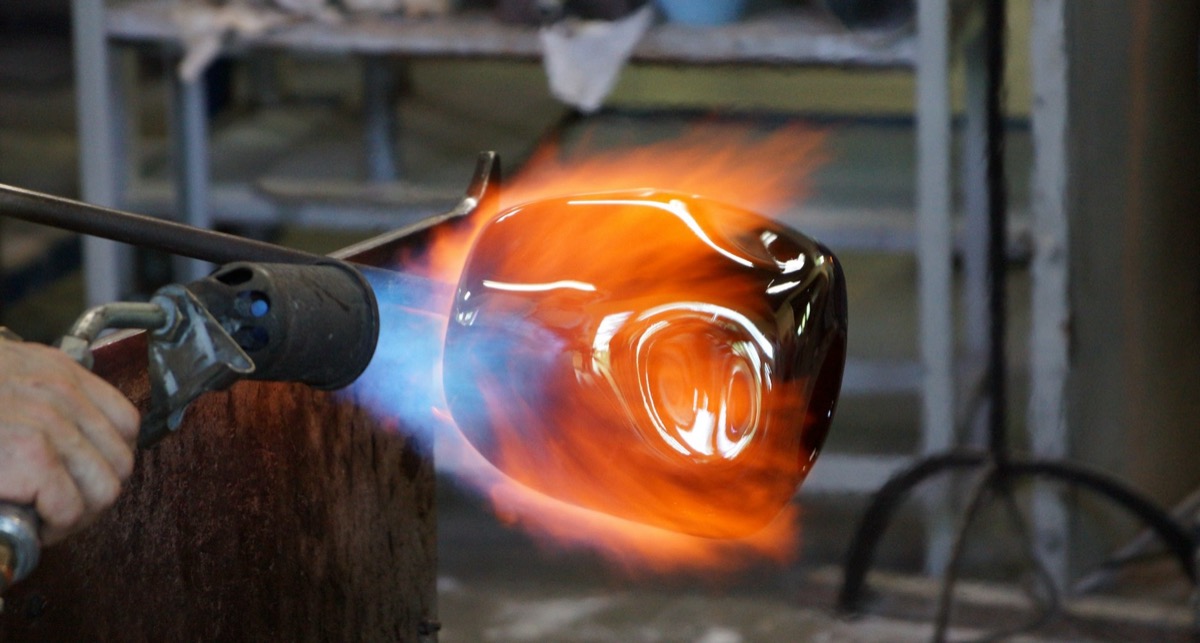
The construction of a genuine Tiffany shade is where forgeries consistently fail. Tiffany's glass selection was obsessive: he sourced and often manufactured glass with deliberate striations, ripples, and color shifts — what the studio called drapery glass, ripple glass, and confetti glass. Each piece was chosen for how it would transmit light, not simply for its surface appearance. The copper foil wrapping each piece was hand-applied, and the solder lines between pieces followed the design's natural contours rather than running in mechanical grids. Modern reproductions typically use flat, uniformly colored glass with little internal variation. Held up to a direct light source, the difference becomes immediate: a genuine shade glows with depth and inconsistency, each glass tile performing differently, while a reproduction looks flat and even. The patina on genuine bronze bases develops distinctively over a century — a deep warm brown with green undertones in recessed areas — that is difficult to replicate convincingly in mass production without the passage of real time.
Collectors who know Tiffany also know the contemporaries, and that knowledge pays its own dividends. Handel and Company of Meriden, Connecticut produced reverse-painted glass shades from roughly 1900 through 1936 that represent a technically distinct but equally serious art form — the imagery was painted on the interior glass surface and backlit, producing a warm, pictorial effect entirely unlike leaded work. Pairpoint Corporation in New Bedford, Massachusetts made blown and molded 'puffy' shades with exceptional three-dimensional quality. Duffner and Kimberly and Bigelow and Kennard both produced leaded glass work in the Tiffany tradition during the same production window. None of these firms carry Tiffany's name recognition, which means their work surfaces in estates at prices that can underestimate the pieces significantly. A signed Handel lamp in excellent condition can bring $3,000 to $20,000 depending on the design and subject matter. For buyers who understand the category, the contemporaries often represent more value per dollar than comparable Tiffany examples at the same auction.
Condition affects Tiffany lamps in ways that carry different market weight depending on the specific damage. Cracked or replaced glass tiles are the most visible and most costly issue — a shade with multiple replaced pieces can lose 40 to 60 percent of its value relative to an all-original example in comparable structural condition. Replaced cap finials, which sit at the top of the shade and are prone to loss during moves, are common and reduce value modestly when documented honestly. Repaired solder lines along the heat cap are nearly expected in lamps a century old and reduce value less than glass damage does. Base patina loss — from over-polishing or attempted refinishing — reduces value and is essentially irreversible. The original dark bronze finish was not decorative paint but a chemical patina applied during manufacture, and later attempts to match it remain visible under close examination. Collectors should request ultraviolet examination of significant purchases, as repairs and replaced glass sections often fluoresce differently from original period materials.
At Ageless Auctions, American art glass lamps — Tiffany and the legitimate contemporaries — are among the categories we examine most carefully when they come through Florida estates. The state's history as a winter destination for wealthy Northern families means that genuine period lamps surface here with real regularity, often having sat in a sunroom or guest room for decades without anyone understanding what they had. We photograph base stamps, shade tags, and individual glass sections at high resolution, note any condition issues with specificity, and research model numbers when they are legible on the base. For buyers, our Florida auctions represent a genuine opportunity to acquire American art glass that has been properly identified and cataloged — not simply described as 'Tiffany-style' and left for the bidder to determine on their own.