Sports Memorabilia Beyond Cards: Jerseys, Bats, and Signed Equipment

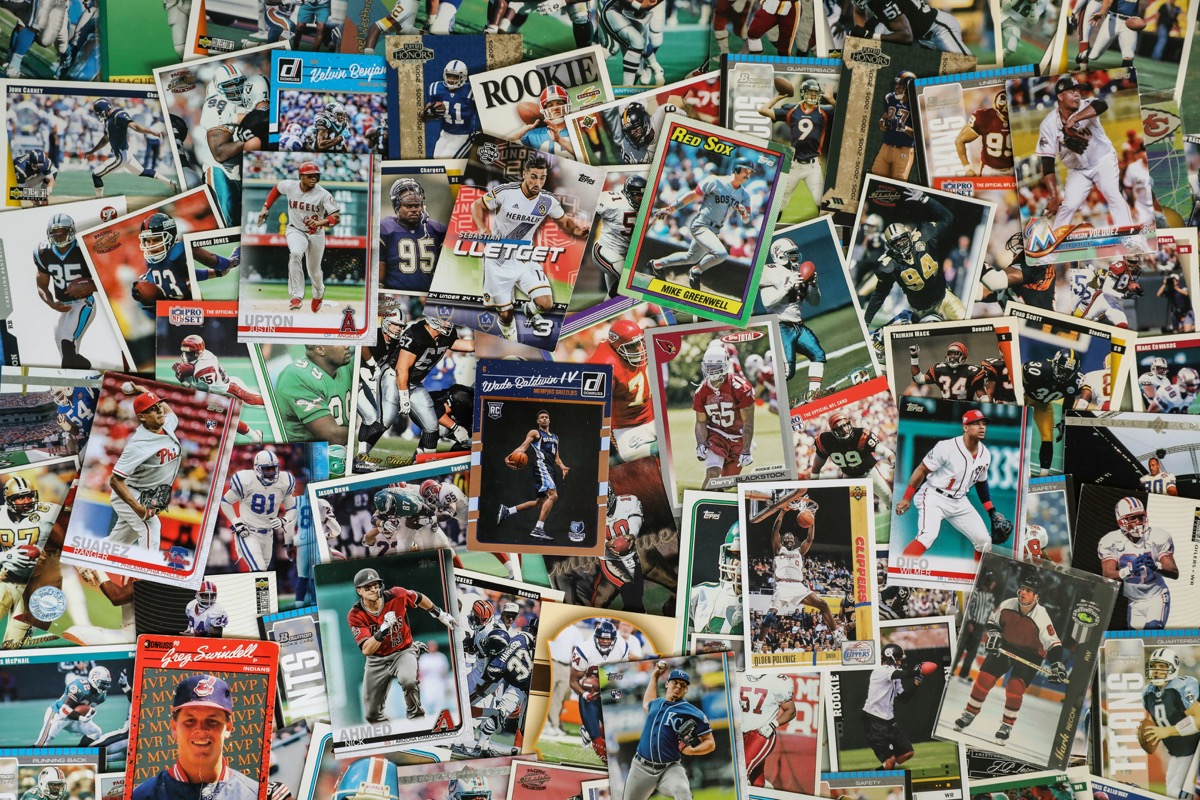
The graded-card market absorbed most of the collector attention and most of the investment capital during the sports memorabilia boom of the early 2020s. Cards are portable, gradable, and easily stored — qualities that made them the natural entry point for a new generation of buyers. But that saturation has created an interesting dynamic: categories of physical memorabilia that cards cannot replicate have outpaced the card market in both interest and auction performance over the past two years. Game-used jerseys, bats, helmets, signed baseballs, and equipment tied to specific players and moments are drawing competitive bidding from collectors who want something singular — something that existed, at one point, on the field or in a player's hands. The appeal is not primarily financial. It is the appeal of the irreplaceable object — the bat that has pine tar on the handle, the jersey with the grass stain from a specific game, the ball signed in blue ballpoint after a World Series victory — and no graded card can replicate it regardless of its population report.
Authentication is the single most important variable in this entire category, and understanding the major services — what they examine, how they grade, and which types of items each handles — is the foundation of buying intelligently. For autographs on flat items, signed photographs, and inscribed memorabilia, JSA (James Spence Authentication) and PSA/DNA are the market standards, with Beckett Authentication Services holding comparable credibility among the collector community. For game-used equipment, the relevant authority is MEARS — Memorabilia Evaluation and Research Services — which examines wear patterns, manufacturer tagging, repair history, and provenance documentation before assigning a letter-based grade. An unauthenticated piece, even when it is genuinely what it appears to be, trades at a steep discount because buyers cannot verify what they are acquiring without taking it on faith. The certificate of authenticity is not a bureaucratic formality — it is what makes the item a market commodity rather than a family story.
Jerseys represent the most complex subsegment of physical memorabilia because the value differential between categories is enormous and not always obvious from photographs alone. Game-worn jerseys — garments actually used in play, with the sweat, repairs, field dirt, and wear marks to prove it — are the top tier. Game-issued jerseys are pieces prepared for a player but potentially never worn in competition; they bear official team tagging and correct sizing but may lack the physical evidence of actual use. Retail replica jerseys have essentially no collector premium regardless of what signature they carry. The most coveted jerseys in the entire market are photo-matched — meaning a researcher has connected a specific jersey to a specific game through photographic evidence, documenting the wear pattern, sleeve repairs, number font, and unique identifiers that appear in period photography. A photo-matched jersey from a significant game carries a premium that can be multiples of an authenticated-but-unmatched equivalent, and the gap is widening as photo-matching research matures.
Bats and balls follow their own distinct valuation logic that surprises collectors coming from the card world. Game-used bats command premiums over pristine, unplayed examples precisely because the evidence of use — pine tar staining, ball marks, handle tape wear, and in many cases actual cracks — documents the bat's field history in ways that cannot be fabricated convincingly. A bat with a known crack from a documented at-bat, authenticated and accompanied by provenance, is more desirable to serious collectors than an identical model in perfect condition. Signed baseballs are evaluated along different lines: a single-signed ball from a Hall of Famer, with the signature placed cleanly on the sweet spot or first panel, commands significantly more than a multi-signed ball where the primary name shares space with twenty others. Official league balls — with the commissioner's stamp, correct period stitching, and authentic leather — are the proper substrate; practice balls and non-official balls carry a discount regardless of who signed them.
Helmets, batting gloves, catcher's equipment, and fielding gloves represent the lower-volume but consistently interesting corners of this market. These categories surface less frequently in estates and at auction than jerseys or signed balls, and that relative scarcity has kept prices firm for authenticated pieces from recognized players. Many of the best finds in this tier come not from professional collectors but from personal or professional connections — someone who worked in a stadium, a trainer, a clubhouse attendant, or a front-office employee who received a piece directly from a player at the end of a season or after a career milestone. Equipment of this kind often comes with no formal authentication at all, having passed directly between people with no intermediary. That type of informal provenance is worth documenting as carefully as any formal chain of ownership — a handwritten letter, a photograph with the player, or a contemporaneous note connecting the item to its origin can substantially increase what a serious buyer will pay and can mean the difference between a modestly priced estate lot and a significant find.
At Ageless Auctions, sports memorabilia is a category we approach with particular care, and Florida's geography is a genuine asset. The state hosts more major-league spring training facilities than any other — more than a dozen teams train across the Grapefruit League corridor each year — and that proximity has meant that Florida estates yield authenticated and informally provenanced sports material at a higher rate than most regions of the country. We work with third-party authentication services on significant signed pieces before cataloging, photograph tagging and wear details closely on game-used equipment, and link to authentication documentation in lot descriptions so buyers can evaluate before bidding. Collectors who follow this market would do well to track our auctions consistently — the material surfaces at irregular intervals, and the pieces that come through Florida estates reflect real connections to the game rather than wholesale inventory.